
Understanding Breathing, CO₂ Tolerance and Regulation
Your bloods come back normal. The finger clip says 98 percent. And you're still wiped out by mid morning, still foggy, still losing the end of your own sentences, and somebody has probably told you it's anxiety.
There's a different explanation for that combination, and it's been sat in the physiology textbooks since 1904.
Oxygen doesn't drift out of your blood by itself. It travels stuck to haemoglobin, and haemoglobin needs a signal before it lets go. Carbon dioxide is that signal. Drop your CO₂ too low and haemoglobin keeps hold, so the oxygen sits in your bloodstream while the tissue that wants it goes short. You get normal readings and a body that doesn't feel remotely normal.
Low CO₂ turns up repeatedly in the research on pain, fatigue and autonomic dysfunction. Around half of those with PoTS go hypocapnic simply from standing up.
The way it happens is almost invisible. Breathing more air than your body needs, over months and years, leaves you less tolerant of ordinary CO₂ levels, which makes you want more air, which keeps the CO₂ down. It's genuinely hard to catch from the inside, because breathing is the one thing you've done continuously since the day you were born.
Tolerance is trainable, though. Same as your tolerance to load, to stretch, to pressure.
What's inside
Twelve lessons across three modules, covering:
- What CO₂ actually does in there, and why the waste gas version you got taught at school causes so much confusion
- The Bohr effect, explained properly, in plain words
- Why breathing patterns go wrong in hypermobile and chronically painful bodies, ribs and diaphragm and connective tissue included
- The BOLT test, so you've got a number to work from and something to track against
- Two session types, CPA for settling your system and TB for building tolerance, both with guided audio so you aren't watching a stopwatch
- The torn state, which is the one concept the whole method hangs off
- A downloadable weekly planner with three levels, so you start where you actually are
- Walking holds, once you've built a base
- When to stop, and why that matters
Please note: this course is also included inside Understanding and Using Your Core. If you already own Core, you already have this and there is no need to buy it again.
Or get it inside the full core course
This course is included in Understanding and Using Your Core, along with everything else in it.
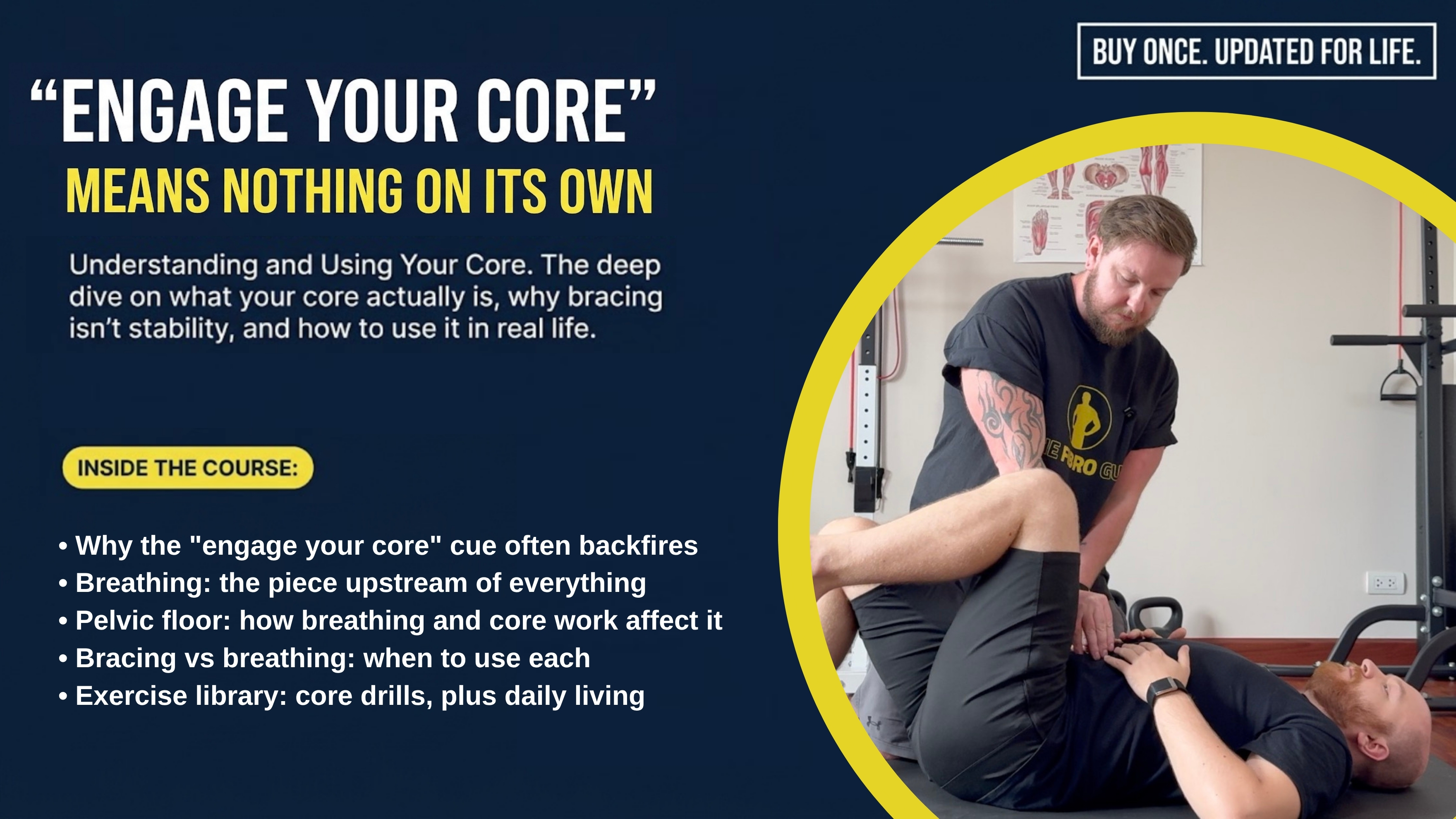
Understanding and Using Your Core
A focused deep dive that clears up the single most confusing topic in hypermobility rehab: the core. It expands the core section from inside the Hypermobility 101 course and turns it into a full course. You will learn what your core actually is, why 'engage your core' so often backfires, the difference between bracing and breathing. For those with hypermobility, hEDS, HSD, fibromyalgia. Deep education plus a practical library, and follow along templates.